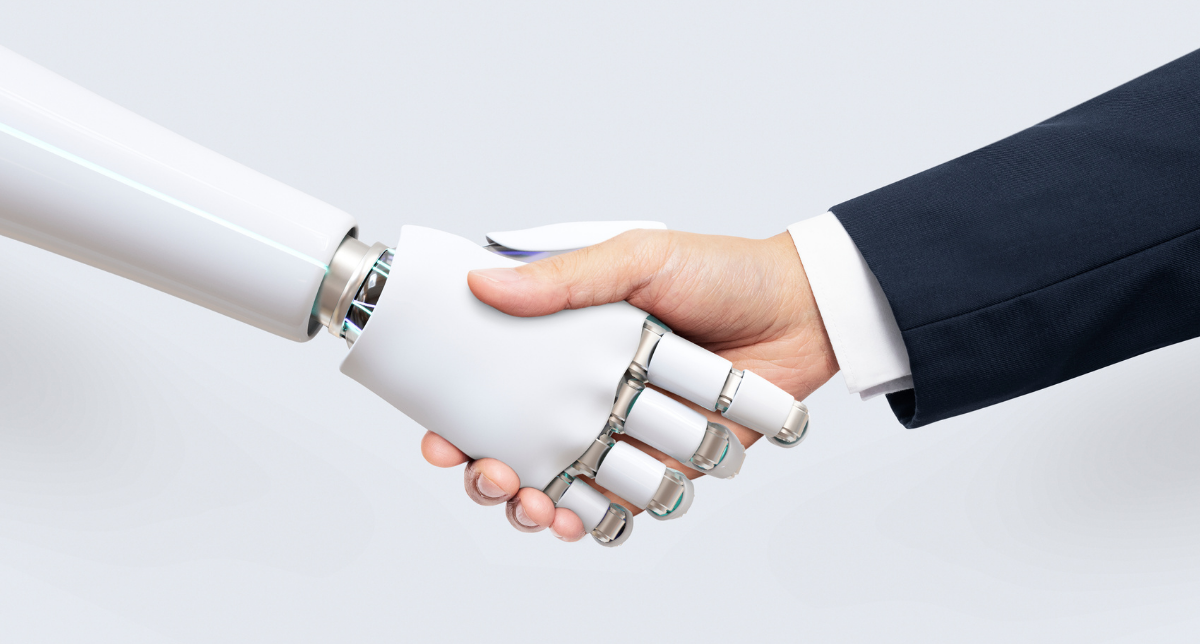
In the past few years, artificial intelligence (AI) has moved from a buzzword in agency corridors to an operational reality across public relations, communications strategy, creative ideation and media-relations workflows. For a high-growth agency like Chemistry PR & Multimedia, this presents both remarkable opportunity and significant responsibility.
Drawing on the Public Relations Society of America’s (PRSA) updated guidance (October 2025) on the ethical use of AI in PR, this blog walks through how AI is transforming our work at Chemistry PR & Multimedia, outlines key ethical guardrails that differentiates best-in-class agencies, and offers concrete case-studies grounded in the services we provide.
- The transformation underway: What AI is doing in PR today
Our team is embracing the fact that AI is no longer fringe. AI is actively changing how communicators plan, create, engage, and measure. Some of the key areas of transformation include:
- Creative ideation & drafting: AI-driven tools can spark brainstorming, draft press releases, generate subject-line alternatives, adapt content by audience segment or channel.
- Visuals, motion, video and animation: Beyond text, generative AI models are creating graphics, animations, video treatments, and rendering creative concepts into moving assets.
- Research, audience insight & monitoring: AI systems analyze large data sets, track sentiment, model scenarios, and identify stakeholder networks.
- Distribution, personalization & workflow automation: From media-pitches tailored via AI to chatbots handling basic inquiries, the backend of PR is evolving.
In short: AI is accelerating what we do and how we deliver. But, and here is the pivot, it doesn’t replace what we know as professional communicators and PR practitioners. Instead, it amplifies, enabling more volume, more personalization and more speed if handled correctly.
- What ethical agencies do differently
Using AI effectively is one thing. Using it ethically is what separates agencies you want to hire from ones you worry about. The PRSA guidance frames this around the core values of the PRSA Code of Ethics, which include advocacy, honesty, expertise, independence, loyalty, fairness, as well as other best practices. Below are five key practices that ethical agencies embed:
a) Build foundational AI literacy
Quality agencies don’t treat AI as a black-box magic wand. They invest in understanding how models work (e.g., large language models), their limitations (e.g., hallucinations, bias, data leakage). They train teams, set policies, and bring the conversation into client engagements. Without that foundation, risk of error or misuse rises.
b) Protect data, privacy and client confidentiality
One of the most critical warning flags: uploading proprietary or confidential client content into public AI tools without controls. The guidance is clear: don’t.The agencies that are doing it right audit vendors, keep human-in-the-loop, and safeguard intellectual property.
c) Apply human judgement & oversight
While AI can generate drafts, visuals and ideas, final decisions must be human made. The PRSA guidance emphasizes that the practitioner remains the gatekeeper. AI is a tool, not an author. Agencies that want to employ AI the right way should use it to accelerate ideation, then engage strategists, creatives and account teams to refine, fact-check, align with brand voice, and ensure relevance.
d) Maintain transparency & disclosure
Trust matters. When AI meaningfully contributes to content, visuals or strategy, disclosure is required. The guidance underscores that stakeholders should understand how AI is used. Agencies should include disclosure clauses in contracts, inform clients and audiences of AI-assisted work (where material), and build clear protocols internally for how AI is applied.
e) Test for bias, misinformation and fairness
Because AI models may perpetuate bias, generate inaccurate or misleading output, or reflect hidden assumptions, good agencies build teams that ask questions: Who is represented? What assumptions were built into the training? Are there unintended consequences? The guidance recommends “red teaming”, diverse review and documentation of AI use.
By embedding these practices, agencies not only protect clients and stakeholders, they build competitive advantage. Clients are increasingly asking: “How are you using AI? Are you doing it responsibly?” Ethical adoption becomes a differentiator.
- Case studies: What this looks like in practice
Let’s bring this to life with three hypothetical yet realistic scenarios aligned with the service set of Chemistry PR & Multimedia:
Case Study 1 – Press-release heading brainstorming & draft creation
Scenario: A consumer-brand client is launching a new eco-friendly product line. The Chemistry PR team uses an AI-powered creative tool to generate 20+ headline and sub-headline options, along with initial draft paragraphs for a news release.
What happened:
- The team prompts the model: “Consumer brand X launches next-gen sustainable product line, target audience millennials & Gen Z, focus on innovation and heritage brand story.”
- The AI returns multiple short-form headings (“Where Sustainability Meets Heritage Innovation”, “Eco Innovation: Brand X Reinvents Itself”, etc.) and a first-draft lead paragraph.
- The account strategist reviews and edits, selecting one headline or mixing two headlines together, reframing language to align brand voice, adjusting for factual accuracy and approved messaging. The AI-draft becomes a springboard, not the final.
- Ethics in action: The team audited the AI model’s output to ensure no inadvertent trademark or IP infringement from similar existing headings; they documented the AI use in the project brief; they confirmed that confidential internal brand strategy was not uploaded into a public generative tool.
Outcome: The release arms the client with a sharpened headline, a human-reviewed and brand-tailored draft, and an internal memo on how the brainstorming session worked (including team reflections: “AI helped accelerate ideation; human oversight refined nuance and voice”).
Key takeaway: AI can enhance ideation speed and volume, but human strategy and brand stewardship remain indispensable.
Case Study 2 – Bringing renderings to life in video
Scenario: A B2B-industrial client has architectural renderings of a new facility. Chemistry PR’s multimedia team uses AI-powered motion-graphics tools and generative video/animation to create a short “fly through” video with an interview used for the voice-over, transitions, and brand visuals in under half the time typically required.
What happened:
- The renderings are uploaded into a closed, enterprise-grade AI animation environment (ensuring IP control).
- The team prompts the system to generate a series of 10 second “shots” that wil be the foundation of a2:30 video highlighting “from foundation to operation” imagery, voice-over script emphasizing sustainability, innovation, and workforce impact.
- The output is reviewed: graphics aligned with brand identity, voice-over verified for accuracy (no hallucinated claims), transitions adjusted for clarity, final video approved by client.
- Ethics in action: Data protection – the raw architectural files were only handled in a secure system; transparency, the client was informed that AI tools were part of the production workflow, and a note in the project wrap‐up documented how the AI-assisted workflow shortened timeline by ~90%. Additionally, the team used the interview as the voice-over for the AI generated parts explaining the animation.
Outcome: The client receives a polished video capable of live-streaming at launch, with the facility’s story told dynamically. The project team reports back on how the creative process changed: extra time freed to think about narrative, interactivity and media-launch planning.
Key takeaway: Creative production is evolving. AI enables lower-cost, faster video/animation buildouts, but human judgement ensures alignment with brand accuracy, permissions, and strategy.
Case Study 3 – Evolution of the creative process: From static to dynamic, from idea to campaign
Scenario: For a national campaign roll-out, Chemistry PR works with a consumer goods client on a multi-touch communication strategy (press release, social media, influencer briefing, interactive microsite). The creative team uses AI tools at multiple stages: concept mapping, target-audience personalization, content variant generation, and scenario planning for outreach.
What happened:
- Creative mapping: The team used an AI ideation engine to generate 10 campaign themes based on client inputs (brand heritage, sustainability, “next-gen” product line, lifestyle appeal).
- Variant generation: For the selected theme, AI created dozens of social-copy variants tailored by audience segment (e.g., Gen Z in urban markets vs. baby-boomers in suburban markets).
- Scenario planning: An AI-driven sentiment-analysis model forecasted potential media-response angles and helped the team prepare responses for different stakeholder reactions.
- Creative refinement: The team held a workshop where AI suggestions were presented, human creatives refined the narrative, account leads aligned on messaging, legal reviewed for IP/trademark risk, client approved final campaign.
- Ethics in action: The agency documented where AI was used vs. where human decisions made critical calls. They established a human-in-the-loop process for every major output. They tested the AI-generated variants for potential bias (e.g., language that might exclude older audiences, or inadvertently marginalize groups). They included disclosure language in the partnership contract: “Parts of concept ideation supported by generative-AI tools; final strategy and content approved and edited by human team.”
Outcome: The campaign launched confidently, with creative assets across channels, personalized copy, measured messaging, and stakeholder-response playbooks. AI compressed the early “discovery to draft” window in the neighborhood of 30% , freeing more time for strategic discussion and alignment and also saving the client money.Key takeaway: The creative process itself is changing and not replaced, but enhanced. Ethical agencies harness AI to expand creative horizon and increase speed without sacrificing quality, originality, brand voice, or human judgement.
- Why this matters for Chemistry PR & Multimedia’s clients
For our clients, companies seeking regional, national or global reach, launching new products, planning events, managing crisis communications, or evolving internal-communications functions responsible, our use of AI offers compelling advantages:
- Faster turnaround: We can generate ideation, draft content and visuals more rapidly, enabling more agile campaign launches.
- Greater personalization: AI tools help tailor messages, visuals and formats across target segments and channels, while our strategists ensure consistency, quality and alignment.
- Enhanced creativity: Because AI can rapidly propose many ideas and variants, our creative teams can spend more time exploring “what ifs,” refining story arcs, and elevating production value.
- Scalable execution: For national campaigns (like through our USPR Network partner-agency model) we can deploy AI-powered workflows across regions, maintaining brand voice while enabling local adaptation.
- Ethical advantage: In a world where stakeholders, journalists, regulators and audiences are watching how AI is used in communications, our commitment to ethical standards becomes a differentiator — helping build trust for your brand.
But, and this is important, these benefits only hold when AI is used ethically, transparently, and with human judgement. Without guardrails, the risks remain real: misinformation, brand-voice drift, bias, exposure of confidential data, erosion of trust. The PRSA guidance reminds us that “AI is not a peer with moral responsibility. Accountability belongs to people.”
- Five steps clients should ask when working with a PR agency using AI
When you’re hiring an agency, here are questions worth asking (and, we at Chemistry PR & Multimedia welcome them):
- “What AI tools do you use — and how do you manage data/privacy?”
You deserve clarity on the tools, vendor audits, data governance and human-in-the-loop protocols. The PRSA guidance stresses vendor assessment (e.g., how training data is handled, bias audits, human review). - “How does AI support versus replace human work in my campaign?”
You want to know that your strategy, content and stakeholder counsel remain human-led. AI assists — it doesn’t conduct your entire campaign independently. - “What sort of disclosure will be made about AI-generated content?”
If AI contributed materially to creative assets, headlines, visuals or videos, will disclosures be clear? The guidance recommends disclosure when AI use “could affect trust, transparency or audience understanding.” - “How do you mitigate bias, ensure fairness and accuracy in AI-generated work?”
Are AI outputs being tested, reviewed by diverse teams, checked for hallucinations or unintentional exclusionary language? The guidance recommends red-teaming and documentation. - “What is the backup plan if AI-generated content is inaccurate, inappropriate or contested?”
Ethical agencies build in human review, fact-checking, client approval and contingency. Because accountability ultimately rests with humans.
- Looking ahead: AI, ethics and the future of PR
As AI tools continue to evolve (agentic systems, autonomous workflows, deeper multimedia generation), the role of the PR professional (and the agency) will shift from operator to ethical architect. The PRSA Ethical Use of AI guidance emphasizes: “AI will undoubtedly change the world. PR professionals must think critically before moving forward, ensuring speed doesn’t come at the expense of responsibility.”
For Chemistry PR & Multimedia, this means:
- Investing continuously in team training and AI literacy.
- Embedding governance, human-in-the-loop workflows and disclosure mechanisms as part of our standard operating system.
- Partnering with clients early on to define how AI will be used in their communications program, what data is involved, what approvals are required, and how transparency is handled.
- Experimenting with creative uses of AI in ideation, video production and campaign personalization, but always with brand integrity, accuracy and ethical reflection front and center.
- Sharing our learnings across the networks in the USPR Network to elevate standards across the industry.
The arrival of AI in public relations is not a “replace-human” story. Rather, it’s a “boost-human” story. For agencies that embrace the technology thoughtfully, align it to strategy, and wrap it in ethical practices, the payoff is real: more creativity, more speed, more scale, and importantly, more trust.
At Chemistry PR & Multimedia, we believe the future of agency-led communications will be shaped by those who ask the right questions: Not just “What can AI do?” but “How can AI be used responsibly to serve the story, the stakeholder, and the brand?” By anchoring our practice in the PRSA’s guidance on the ethical use of AI, we’re committed to delivering value while upholding the highest standards of professional integrity.
If you’d like to explore how AI-augmented services can accelerate your next product launch, event, influencer campaign or crisis-communications program, we’d be glad to have a conversation.