It is a fascinating legal and ethical question: if someone on TikTok writes an unsolicited jingle for a company, who owns the brand voice?
If you’ve spent any time on TikTok lately, you’ve heard them, the unofficial jingles.
Catchy, clever songs created by everyday users for brands that never asked for them… yet undeniably benefited from them.
These jingles don’t come from agencies or brand briefs. They come from communities, often from creators simply having fun, remixing brand names into melodies that feel authentic, memorable, and culturally fluent.
What feels like playful internet creativity, however, raises a much bigger question for marketers:
When audiences start creating for brands, who actually owns the brand voice?
Fan Made Jingles: Why are they happening now?
The rise of fan-made jingles isn’t accidental. It’s the result of several forces colliding at once:
- TikTok’s short-form, sound-first format
- A culture that rewards remixing and participation
- And a growing expectation that brands engage, not just broadcast
Much of this trend seems to be driven by Black creators, whose musicality, humor, and cultural intuition have long helped shape internet culture, often before brands know how to respond. TikTok simply gives that creativity a louder microphone.
Audiences are already signaling what resonates. The question is whether brands are listening, and how.
Dr Pepper’s Viral Jingle: From TikTok to Commercial
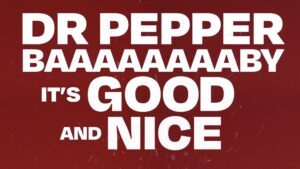
One of the most visible examples of this trend emerged in late 2025, when TikTok creator @romeosshow posted an 11-second jingle inspired by a personal love of Dr Pepper.
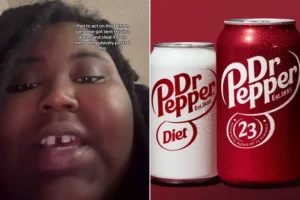
What began as a playful post quickly gained momentum, drawing tens of millions of views. Not long after, the jingle moved fromTikTok to television, airing as a 15-second spot during the College Football Playoff National Championship.
The scale of the virality was notable on its own. But what drew particular attention was how Dr Pepper chose to engage with it.
Rather than simply leveraging the moment, the brand licensed the jingle, credited the creator, and approached the campaign as a collaborative effort. Romeo was involved in shaping how the audio evolved, effectively transforming a fan-made clip into a nationally broadcast advertisement.
In doing so, Dr Pepper signaled a different approach to brand participation, one that acknowledges where creative momentum often begins and recognizes the creators behind it.
This has a couple of benefits that immediately stand out: First, from an engagement standpoint, it signals to creators and consumers that Dr. Pepper is a “champion of the little guy.” This is valuable goodwill that isn’t always easily accessible for corporate giants.
Second, it is “clean” legally. By engaging with the creator, Dr. Pepper can get their lawyers to lay out exactly who owns what. We live in a world where a brand might sue a creator for profiting on their name and a creator might sue a brand for promoting their content. It’s a mess. Dr. Pepper will now avoid what others who get caught up in this trend might have to deal with.
Why This Moment Matters Beyond One Brand
Since that campaign aired, many creators across TikTok have begun experimenting with similar jingles, often with the hope of catching the attention of brands spanning fast food, automotive, and beverage categories.
For marketers, this shift surfaces a new set of questions:
- Who controls the brand narrative when creativity comes from the public?
- How much influence should platforms have over brand voice?
- Where is the line between genuine community engagement and crowdsourced strategy? When does participation become expectation?
What starts as organic expression can quickly turn into pressure, for both creators and brands, to constantly perform, respond, and capitalize.
Hidden Valley Ranch: When a Brand Acknowledges Without Adopting
Not every brand encountering a viral, fan-made jingle chooses to extend it into a national campaign, and that isn’t necessarily a misstep.
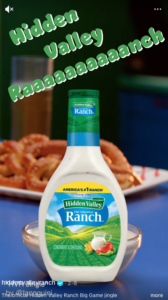 Hidden Valley Ranch entered the conversation after creator @Langguini posted a catchy, brand-referencing sound that quickly spread across TikTok. The brand’s social team engaged with the trend by commenting on videos and incorporating the audio into its own TikTok content, signaling awareness and appreciation without immediately translating the moment into a full-scale advertising execution.
More recently, reporting has indicated that the brand has been in contact with the jingle’s creator, Alandria Killian (@Langguini), with both the creator and brand suggesting that some form of collaboration may be underway (Lamour, 2026). While details remain limited, the development suggests a possible shift from light-touch participation toward more formal recognition of the creator’s role.
This approach highlights a different, but equally important, strategic choice.
Where Dr Pepper moved quickly toward co-creation and national amplification, Hidden Valley Ranch initially appeared to favor participation without full ownership, acknowledging community creativity while maintaining distance from elevating the sound into an official brand asset.
That distinction is significant. Not every viral moment aligns with a brand’s long-term voice, tone, or positioning. Elevating every fan-generated jingle into a campaign can risk diluting identity and may begin to create an expectation that brands should continually formalize viral creativity.
In this case, Hidden Valley Ranch illustrates that listening does not always require immediate amplification. Sometimes it can begin with recognizing a moment, briefly joining the conversation, and allowing cultural momentum to unfold before deciding whether, or how, to integrate it into the brand’s narrative.
So… Should Brands Let TikTok Write the Jingle?
In my view, the answer isn’t yes or no…it’s balance. That may not be the definitive stance some might hope for, but the reality is that multiple dynamics can exist at once.
Brands don’t need to incorporate every viral moment or fan-made sound into their strategy. At the same time, they can’t ignore what audiences are responding to in real time. Increasingly, people gravitate toward brands that feel human, brands that signal attentiveness and cultural awareness, not just commercial intent.
One potential pitfall could surface if a fan created jingle catches on that the brand it is celebrating has a problem with. What do you do then? A cease and desist order is hardly engaging, but if your professional marketers think the brand you have worked hard to create is being damaged, you could be left with no choice.
For the teams behind those brands, the challenge becomes maintaining equilibrium: remaining open to audience creativity without losing strategic clarity. Not every voice needs to shape the brand, but selective collaboration can strengthen relevance.
What seems most effective is a disciplined approach:
- Listen closely.
- Participate selectively.
- Maintain clear boundaries around identity.
TikTok can influence brand voice, but it shouldn’t replace it.
Owning Your Voice in the Noise
TikTok didn’t erase brand voice, but it has broadened who can shape and influence it.
The brands likely to resonate most in this environment won’t be those chasing every trend or deferring creativity entirely to the algorithm. They’ll be the ones that recognize when to listen, when to collaborate, and when to lead with intention.
Because when everyone can write the jingle, the brands that stand out are the ones that still know who they are.